At first, investigators only had fragments.
A missing six-year-old girl. A FedEx driver. A truck moving through the back roads of Wise County, Texas. But as prosecutors began assembling the evidence against Tanner Horner, one element reportedly changed the entire direction of the case:
DNA.
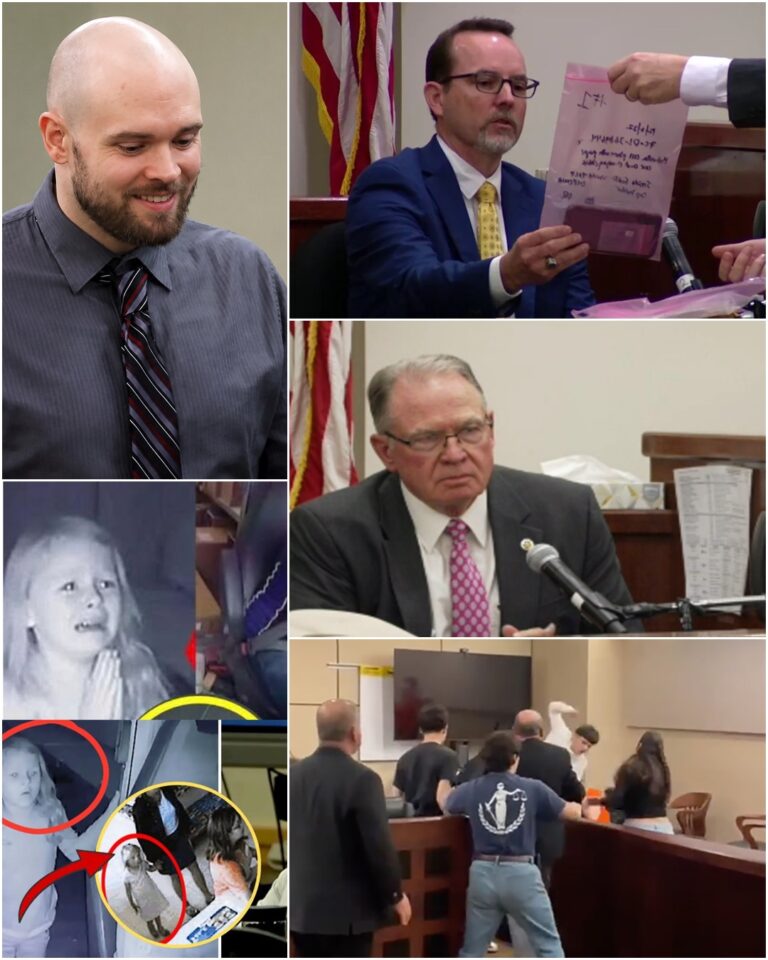
Inside the courtroom, prosecutors presented forensic evidence they argued directly linked Horner to both the crime scene and Athena Strand herself. According to reports from the trial, DNA connected to Horner was allegedly discovered on Athena’s clothing and body — evidence prosecutors described as CRITICAL in reconstructing the final moments before the little girl’s death.
For investigators, the forensic findings became impossible to ignore.
The case against Horner was never built on a confession alone. Authorities combined DNA evidence with GPS records, surveillance footage, onboard truck systems, and audio recordings from the FedEx vehicle to create what prosecutors called a near-complete timeline of the abduction and murder.
Piece by piece, the truck became a MOVING CRIME SCENE.
Investigators reportedly tracked Horner’s route through GPS data generated from the FedEx vehicle after Athena disappeared from her home in late 2022. Internal truck cameras and location tracking systems allegedly showed where the vehicle traveled, where it stopped, and how long Athena may have remained alive inside.
But it was the forensic evidence that reportedly closed the gaps.
During trial proceedings, prosecutors argued the DNA findings destroyed nearly any possibility that Horner could distance himself from direct physical involvement in the crime. Legal analysts following the case noted that once forensic evidence is paired with digital tracking and recorded audio, the defense faces enormous difficulty creating reasonable doubt.
And according to courtroom reports, the prosecution knew it.
The atmosphere reportedly shifted dramatically once jurors began hearing the scientific details behind the DNA analysis. Unlike emotional testimony or dramatic courtroom statements, forensic evidence carries a colder weight — one rooted in measurable physical traces left behind after violence occurs.
In many murder cases, DNA becomes the silent witness.
A strand of skin cells.
A transfer on fabric.
A microscopic trace invisible to the naked eye.
But inside the Horner trial, prosecutors allegedly presented those traces as part of a larger narrative of control, confinement, and terror inside the FedEx truck.
Audio recordings introduced during trial reportedly captured Athena crying and asking:
“Are you a kidnapper?”
Prosecutors further alleged that Horner threatened the six-year-old and later strangled her during the attack. Combined with the GPS route and forensic evidence, investigators reconstructed what they believed were Athena’s final movements alive.
The result was a timeline prosecutors described as deeply disturbing.
Courtroom observers said some of the evidence left jurors visibly shaken. While many details from the forensic reports were not fully released publicly, multiple media outlets confirmed that the prosecution relied heavily on the combination of DNA analysis and digital evidence to establish Horner’s direct involvement.
For the defense, the challenge became increasingly severe.
Because DNA does not rely on memory.
It does not panic under questioning.
It does not change its story.
It simply remains.
Experts have long described forensic DNA as one of the most powerful tools in modern criminal prosecution precisely because it can tie a suspect physically to a victim, object, or location even when no eyewitness exists.
And in the murder of Athena Strand, prosecutors argued the evidence painted one horrifying conclusion.
That inside a FedEx truck traveling through Texas roads, a six-year-old girl spent her final moments trapped beside the man whose DNA investigators say was left behind on the evidence surrounding her death.
By the time prosecutors finished laying out the forensic timeline, many believed the trial had already crossed a point of no return.
Because the most terrifying witness in the courtroom was not a person.
It was the SCIENCE left behind after the crime.