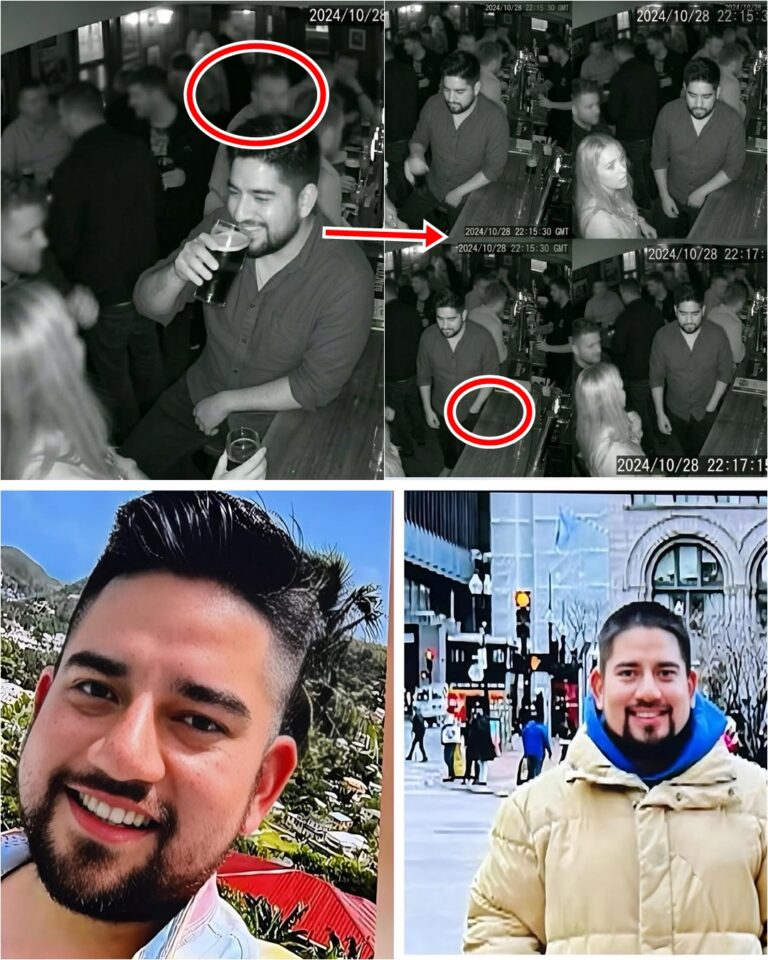
What follows is a hypothetical reconstruction, based on known patterns of nightlife-related crimes in Medellín and publicly reported gaps in the timeline. It is not a confirmed account of what happened to Eric Fernando Gutierrez Molina.
The music is loud, but not overwhelming. Neon light spills across polished surfaces, flickering over glasses, hands, faces that blur in motion. It is the kind of place where nothing seems out of place — where strangers become temporary companions, and the night stretches longer than expected.
Somewhere in that crowd, a moment may have passed unnoticed.
A drink set down.
A glance away.
A hand moving — quickly, almost invisibly.
If investigators are exploring the possibility of substances like so-called “devil’s breath” being used that night, the method would not have required force. It would not have caused a scene. By most accounts of similar incidents, it takes only a brief lapse — a SECOND — for control to shift.
And then, nothing appears wrong.
NO STRUGGLE. NO SIGNAL. JUST SILENCE.
In this hypothetical sequence, Eric Fernando Gutierrez Molina continues as before. He talks. He moves through the space. He may even smile. To anyone watching — even to security cameras — there is no clear disruption.
This is what makes such scenarios difficult to detect.
Certain substances, widely reported in regional crime patterns, are said to induce confusion, compliance, and memory gaps. Victims may not resist. They may not even realize something is happening.
If that were the case here, the transition would have been subtle:
From alert → to slightly disoriented
From engaged → to detached
From in control → to suggestible
Not instantly. But quickly enough.
THE CROWD AS COVER
In busy nightlife districts like El Poblado, movement is constant. People enter and exit. Groups merge and separate. A person leaving with someone new does not raise alarm.
This is where the trail can begin to fracture.
If Eric left the venue in a compromised state — whether guided, persuaded, or simply following — it might not have looked unusual. No raised voices. No visible distress.
Just another figure disappearing into the night.
For investigators, this creates a problem:
CCTV may show movement, but not intent.
THE “BLANK HOURS”
One of the most unsettling aspects in cases like this is not what is seen — but what is missing.
Time passes. Messages stop. Location data becomes inconsistent or unfamiliar. The narrative loses continuity.
These are often referred to as the “blank hours” — periods where actions cannot be clearly reconstructed.
In a scenario involving disorientation, those hours may include:
Unplanned changes in location
Interaction with individuals not previously identified
Decisions made without full awareness
Each step becomes harder to verify. Each minute, more uncertain.
A PATTERN — NOT A CONCLUSION
Authorities have not confirmed that any substance was used in this case. However, reports have indicated that investigators are considering multiple angles, including interactions with unknown individuals and unexplained gaps in memory among those present that night.
In Medellín and other major cities, law enforcement has long warned about opportunistic crimes targeting visitors in nightlife settings. These incidents often rely on subtlety rather than force — a key detail that aligns with the absence of immediate alarm.
But correlation is not confirmation.
And that distinction matters.
WHAT REMAINS
What is known is limited.
What is suspected is still under examination.
What happened in those final moments inside the venue remains unclear.
Was there a single, decisive action that altered the course of the night?
Or did events unfold more gradually, piece by piece, unnoticed until it was too late?
The answers, for now, sit somewhere between data points, witness accounts, and unanswered questions.
A NIGHT THAT NEVER ENDED
If there was a moment — just one — where everything shifted, it did not announce itself.
No one stopped the music.
No one saw the line being crossed.
And yet, from that point forward, the trajectory changed.
A normal night became something else.
A routine outing turned into a case still under investigation.
And at the center of it remains a question that continues to unsettle:
What really happened in that single second no one was watching?